| |
Join NRIpress.club
For NRIs Hope |
Business Owner's Opportunity
To Get Referral |
 |
|
|
 |
Restaurants Canada welcomes extension of Federal Fuel Excise Tax suspension

Restaurants Canada says it welcomes Tuesday’s announcement by the federal government that it is extending the suspension of the federal fuel excise tax until January 31, 2027.The extension provides some relief to Canadians and businesses facing continued cost pressures, said the national organization
Restaurants Canada has been advocating for an extension of the suspension as rising fuel costs add to the financial pressures facing both consumers and restaurant operators. Gas costs have risen by an average of 46% since December 2025, contributing to higher food and transportation costs and supplier fuel surcharges, reported by 86% of restaurants...Read More |
Restaurants Canada Welcomes Extension of Federal

oronto, Sept. 02, 2026 (GLOBE NEWSWIRE) -- Restaurants Canada welcomes today’s announcement by the federal government that it is extending the suspension of the federal fuel excise tax until January 31, 2027. The extension provides some relief to Canadians and businesses facing continued cost pressures.Restaurants Canada has been advocating for an extension of the suspension as rising fuel costs add to the financial pressures facing both consumers and restaurant operators. Gas costs have risen by an average of 46% since December 2025, contributing to higher food and transportation costs and supplier fuel surcharges, reported by 86% of restaurantsFor Canadians, keeping the federal fuel excise tax suspended reduces the cost of gasoline and provides some relief from a significant household expense...Read More
|
Importers Face New 50% Tariffs on Canadian Goods.
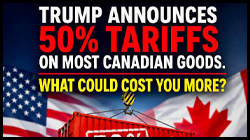
New 50% ad valorem additional duties on Canadian goods took effect on August 22, 2026 following the breakdown of trade negotiations between the U.S. and Canada. U.S. Customs and Border Protection (CBP) has issued operational guidance for importers and brokers applying the new tariffs.
Trade tensions escalated further on August 24 when President Trump announced that tariffs on all Canadian automobiles and trucks, automotive parts, and steel will increase to 50% starting January 1, 2027.
In response, Canada announced dollar-for-dollar retaliatory tariffs on August 25. Those tariffs of up to 50% ad valorem go into effect on September 8, 2026 and cover over 700 categories of American goods equaling $20 billion, including steel, dairy products, fresh and frozen fish, kitchen appliances, clothing, tools and farm equipment.
For importers, the immediate issue is whether either sets of duties apply to imported and exported goods. Because both the Section 338 and Canadian retaliatory duties are based on lists of tariff codes, it is critical to verify the correctness of the tariff code applied to the applicable good under the Harmonized Tariff Schedule of the United States (HTSUS) or the Customs Tariff (Canada)...Read More |
Food inflation in Canada: Six key questions about higher prices

The cost of food is on everyone’s minds. Mounting grocery bills weigh on household budgets, and are pushing many Canadians to make difficult decisions about how and where to spend.
This also isn’t a new problem. We’ve seen higher food prices for more than five years, and there are few signs of relief in the near term, especially as the conflict in the Middle East continues and trade policies evolve.
While high food costs aren’t a uniquely Canadian phenomenon, they live at the heart of the economic experience in Canada....Read More |
|

|
|
|